
“We want our children to see the daylight and the sun go down on our land, the home of the Dreamtime, and to live there to their old age and really understand their culture.” David Mowaljarlai (1984)

The theme behind this unit of work is NAIDOC week. NAIDOC celebrations are held each year in July and provide a fantastic opportunity to involve students in celebrating “the history, culture and achievements of Aboriginal and Torres Strait Islander peoples” (NAIDOC, 2018).
Making such links enhances connections for children with their local community. NAIDOC provides a focus for the teaching and learning in the classroom and the techniques and pedagogy can be further implemented and encouraged as an ongoing priority.
The activities outlined in this unit are intended to be implemented into classroom practice during a school’s NAIDOC Week through open classroom opportunities, with parents and carers invited to share in the learning journey with the students.

Each activity in this unit of work links directly to the Australian Curriculum particularly focusing in where “Cross Curricular priorities” (ACARA, 2018) are signposted
The unit also draws upon the 8 ways framework (2012) which allows teachers to include and teach through Aboriginal perspectives using Aboriginal learning techniques.

The 8 ways “supports meaningful cross-cultural dialogue and shared learning experiences” (Haberlah, 2017). This culturally informed pedadgogy is informed by “ways of knowing, ways of doing, ways of being and ways of valuing” (Martin, 2017, as cited in Haberlah, 2017).
It is with this in mind that the four activities have been developed, to focus student’s learning of country, place, culture and people.
Firstly, in Activity 1, through an opportunity to learn about the importance of story-telling with a focus on Dreamtime.
In Activity 2, students will examine their own environment and the different ways in which places are represented.
Activity 3’s focus is expressing ideas through music.
Activity 4’s focus is on learning about identity through contemporary visual art and how relationships between people and place can be conveyed.
Helen Henaghan


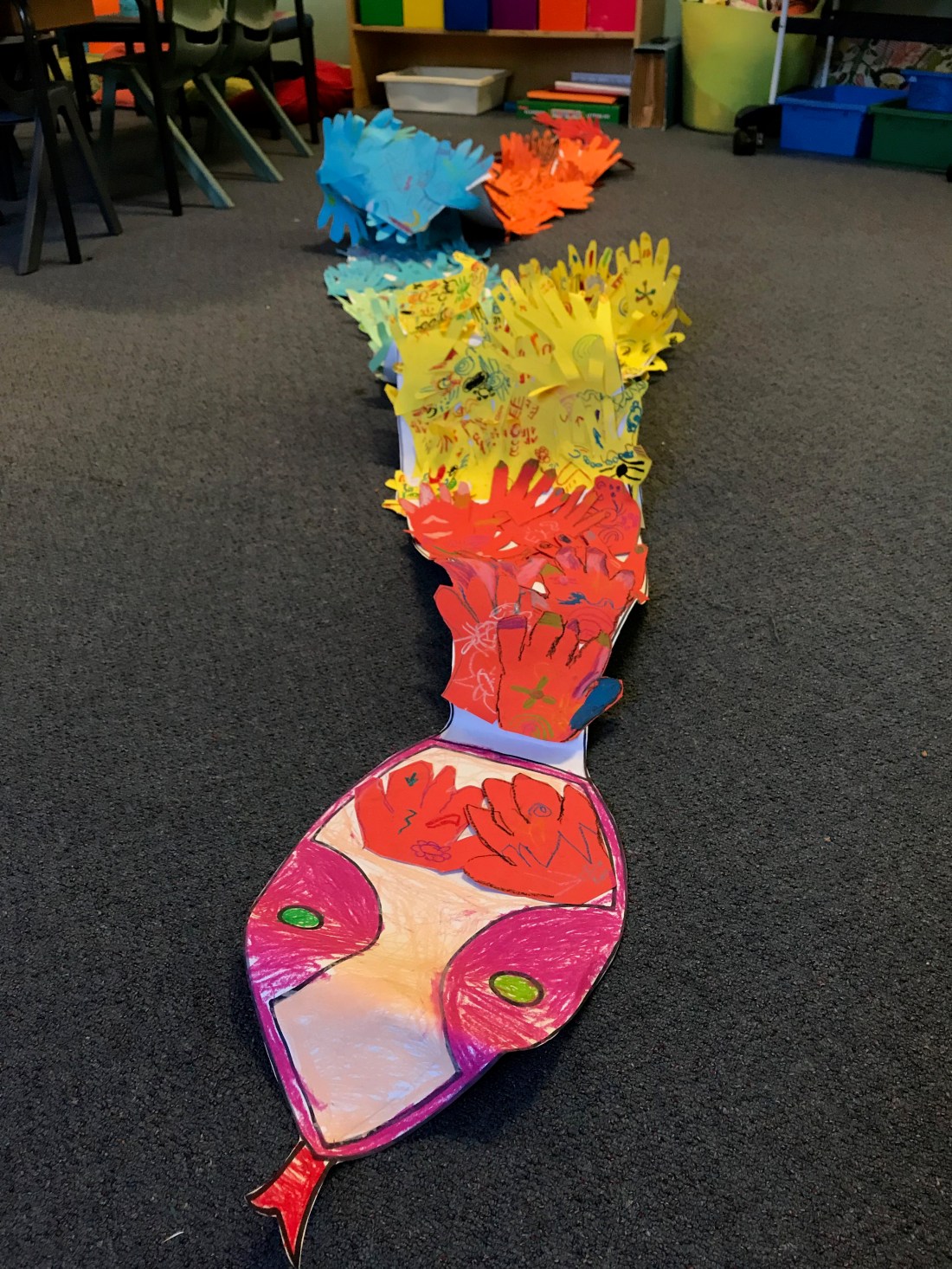


 helenhenaghanedab162